In partnership with HairNation

Hair Transplant Surgery in Calgary

Permanent, natural-looking FUE and FUT hair restoration for men and women, performed by our doctor-led partner clinic in Calgary.

Physician-ledFUE and FUTLocal anesthesiaMen and women
FUE Hair TransplantFUT Hair TransplantHairline RestorationScalp MicropigmentationMedical Hair Loss TherapyCalgary SouthFree ConsultationFUE Hair TransplantFUT Hair TransplantHairline RestorationScalp MicropigmentationMedical Hair Loss TherapyCalgary SouthFree Consultation
The Procedure

What is a hair transplant?

Quick answer: A hair transplant moves permanent, DHT-resistant hair follicles from the back and sides of your scalp into thinning or bald areas. It is performed under local anesthesia in a single day, using either FUE or FUT. New growth typically starts at three to four months and matures at twelve to eighteen months. In Calgary, Rejuvenation Dermatology patients are treated by HairNation.

Hair at the back and sides of the scalp is genetically resistant to DHT, the hormone that drives pattern hair loss. A transplant relocates those follicles, one follicular unit at a time, into the areas where hair has already been lost. Because the relocated follicles keep their original genetic programming, they continue growing in their new position.

The two established harvesting methods are Follicular Unit Extraction (FUE), which removes grafts individually and leaves no linear scar, and Follicular Unit Transplantation (FUT), which removes a thin donor strip that is then dissected into grafts under magnification. Both produce natural growth. The right choice depends on your donor supply, hair characteristics, hairstyle, and how much coverage you need.

Surgery restores what has already been lost. Protecting the hair you still have is a separate job, handled with medical hair loss therapy, which is why most long-term plans combine the two.

1 daySingle session
3 to 4 moGrowth begins
12 to 18 moFull result
Our Hair Restoration Partner

Proud partner of HairNation.

Rejuvenation Dermatology partners with HairNation, a doctor-led hair transplant and hair loss clinic in Calgary, so patients considering hair restoration are referred directly to a dedicated surgical team rather than a general aesthetics provider.

Dr. Navi Dhaliwal, Medical Director of HairNation hair transplant clinic in Calgary
Medical Director

Dr. Navi Dhaliwal

Dr. Dhaliwal's own experience with androgenetic alopecia is what led him into hair restoration. After training with leading hair transplant specialists in Miami, Los Angeles, and Asia, he brought those techniques to Western Canada and founded HairNation in Calgary.

His team treats patients from across Canada and the United States, beginning every case with a comprehensive assessment to identify what is actually driving the hair loss before any surgical or medical plan is built. Complimentary virtual consultations are available for hair transplant inquiries.

FUE vs FUT

Two ways to harvest a graft.

Both techniques transplant the same follicular units and both grow the same way. The difference is entirely in how grafts are removed from the donor area, and that difference is what decides which one suits you.

Quick answer: Neither FUE nor FUT is universally better. FUE removes follicular units one at a time and leaves no linear scar, so it suits short hairstyles and small to moderate sessions. FUT removes a thin donor strip and yields a high graft count in a single session, so it suits advanced loss where maximum density matters. Donor supply, hair calibre, scalp laxity, and how much coverage you need decide which one is recommended.
FUE
FUT
Harvesting
Follicular units removed individually with a micro punch
Thin donor strip removed, then dissected into grafts
Donor appearance
Tiny dot scars, dispersed and hard to detect
One fine linear scar, concealed by surrounding hair
Suits short hairstyles
Yes, including very short crops
Better with medium length or longer hair
Graft yield per session
Small to large sessions
High graft counts in one session
Donor stewardship
Draws from a wide donor zone
Preserves donor density for future sessions
Typical healing
No sutures, faster donor comfort
Sutures or staples removed at follow-up
Often chosen for
Hairlines, temples, beard and eyebrow work, early to moderate loss
Advanced loss where maximum density is the goal

General comparison only. Your donor supply, hair calibre, scalp laxity, and coverage goals determine the recommendation, which is confirmed at consultation. Read more about FUE and FUT at HairNation.

Procedures and Treatments

The full hair restoration toolkit.

Hair restoration is not one procedure. Surgery, medical therapy, and non-surgical techniques are combined into a single plan built around the cause of your hair loss. Each option below is delivered by HairNation in Calgary.

Before & After

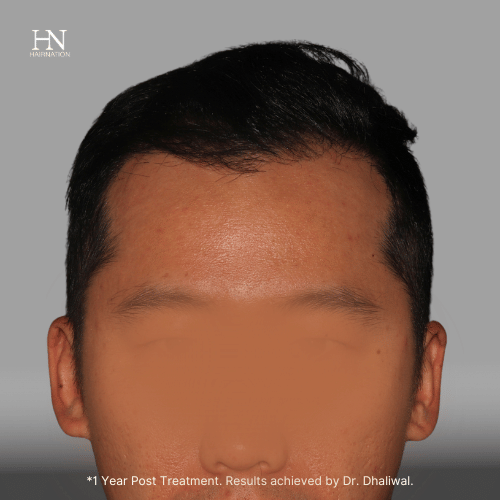
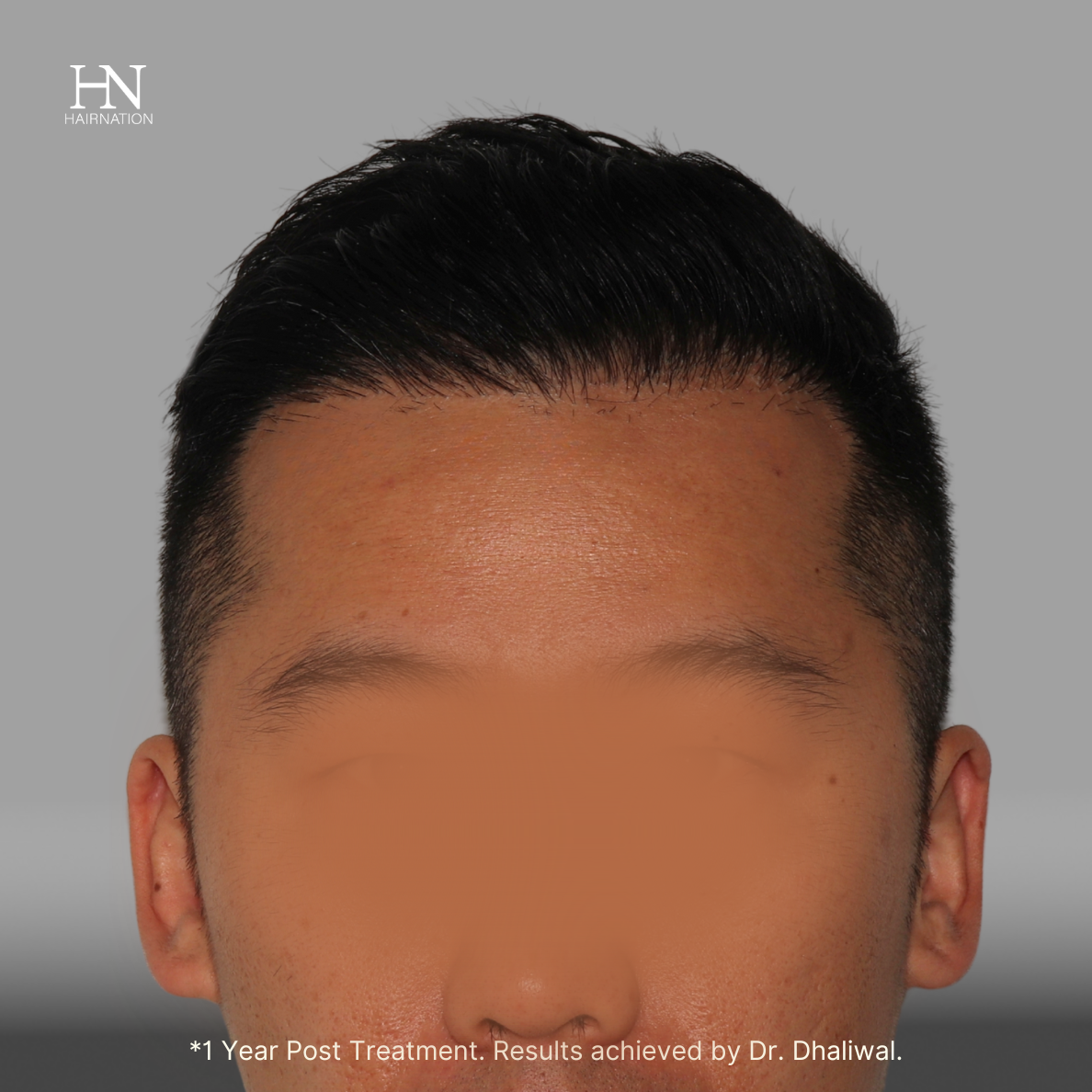
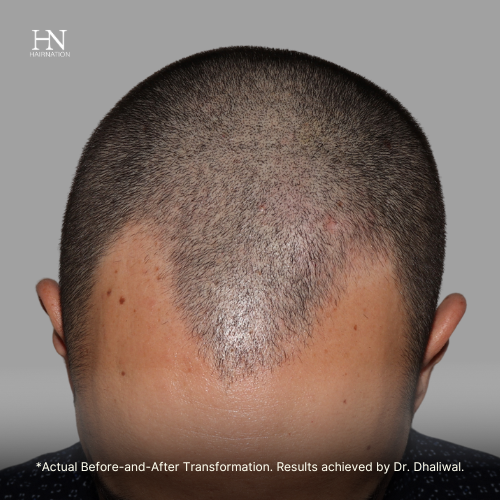
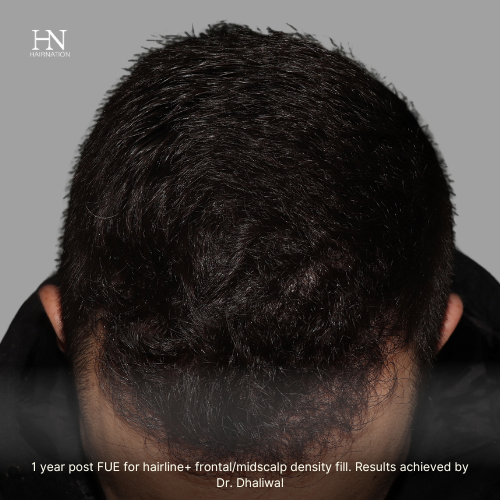
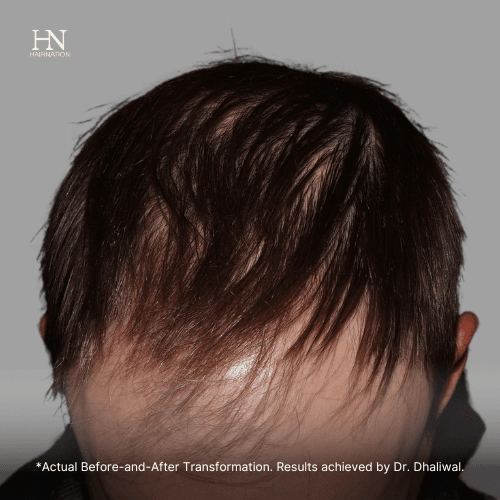
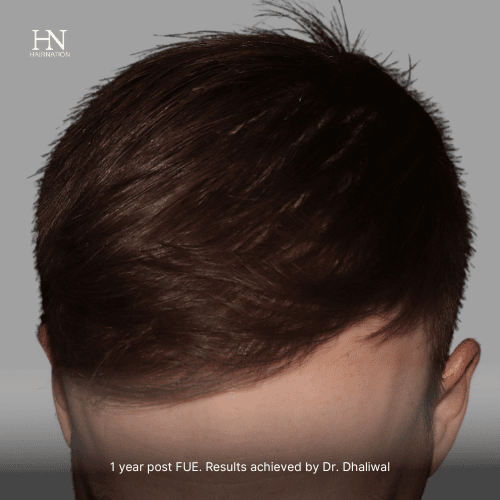
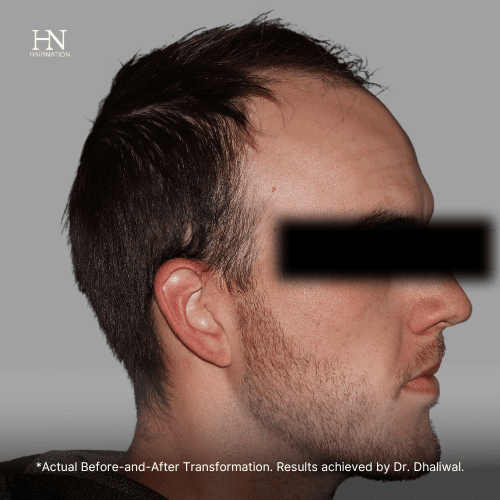
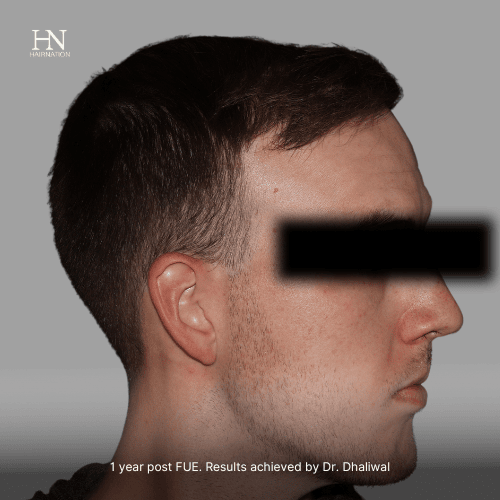
One year after an FUE transplant.

Patient results from HairNation in Calgary, photographed approximately twelve months after a single FUE session. Results vary between individuals.

Hair transplant Calgary before photo, hairline and crown thinning
Before
Hair transplant Calgary after photo, one year post FUE
After
FUE · 1 year post-procedure
Before FUE hair transplant, receding hairline, HairNation Calgary
Before
After FUE hair transplant, restored hairline, HairNation Calgary
After
FUE · 1 year post-procedure
Before hair restoration surgery, thinning crown, Calgary
Before
After hair restoration surgery, restored crown density, Calgary
After
FUE · 1 year post-procedure
Before hair transplant, temple recession, HairNation Calgary
Before
After hair transplant, rebuilt temples and hairline, HairNation Calgary
After
FUE · 1 year post-procedure

Photographs are of HairNation patients and are published with consent. Individual results vary with donor supply, graft count, hair characteristics, the cause of hair loss, and adherence to the medical plan. No specific outcome is guaranteed.

What to Expect

From consultation to procedure day.

01

Assessment

Your scalp, donor area, medical history, and bloodwork are reviewed to identify what is driving the loss and confirm you are a candidate.

02

Design and plan

Hairline shape, graft count, and technique are agreed together, along with the medical therapy that will protect your existing hair.

03

Procedure day

The scalp is numbed, grafts are harvested by FUE or FUT, then placed one by one to follow your natural angle and growth pattern.

04

Recovery and growth

Aftercare instructions, staged follow-ups, and monitoring across the first year as the transplanted follicles establish and mature.

Growth Timeline

When you will actually see it.

Hair transplant results arrive on a biological schedule, not a marketing one. Knowing the sequence in advance is what keeps the first few months from feeling like a setback.

Quick answer: Transplanted hair sheds between weeks two and eight, which is expected and is not graft loss. New growth begins at three to four months, becomes clearly visible at six to nine months, and reaches full density and texture at twelve to eighteen months.
Days 1 to 10

Small crusts form around each graft and settle. Most desk-based work resumes within a few days, and mild swelling or tenderness fades over the first week.

Weeks 2 to 8

Transplanted hairs shed. This is expected and is not graft loss. The follicle remains in place and enters a resting phase before regrowth.

Months 3 to 4

New growth begins. Early hairs are fine and light, and coverage looks uneven at this stage because follicles wake up at different rates.

Months 6 to 9

Density becomes clearly visible. Hairs thicken, darken, and start to behave like the surrounding hair, and most people feel the change at this point.

Months 12 to 18

The final result. Texture, calibre, and density mature fully, and the hairline blends without any visible transition.

Travelling Patients

Coming to Calgary from out of town.

Patients travel to Calgary from across Alberta, British Columbia, Saskatchewan, and the United States for hair restoration. Complimentary virtual consultations mean the assessment, graft plan, and quote are all settled before you book anything.

Quick answer: The surgical clinic is at 10201 Southport Rd SW #225 in Calgary's south, inside Calgary Vein and Laser. Out of town patients complete a free virtual consultation first, then travel for a single surgical day. Follow-up is handled remotely where distance makes in-person visits impractical.
Candidacy

Is it right for you?

Strong hair transplant candidates share a few characteristics. Your consultation with the HairNation team confirms whether surgery, medical therapy, or a combination is the better path.

  • Stable, adequate donor supply
  • Pattern loss rather than active shedding
  • A clear diagnosis of the cause
  • Good general health
  • Realistic coverage expectations
  • Willing to protect remaining hair medically
  • A non-smoker, or willing to pause
  • Ready for a twelve month growth timeline
Questions

Hair transplant FAQs.

Where can I get a hair transplant in Calgary through Rejuvenation Dermatology?

Hair transplant surgery for Rejuvenation Dermatology patients is performed by HairNation, our doctor-led hair restoration partner, located at 10201 Southport Rd SW #225 in Calgary. Consultations are booked directly with the HairNation team at 1 (587) 952-8844 or through the form on this page.

Which hair transplant method is better, FUE or FUT?

Neither is universally better. FUE harvests individual follicular units and leaves no linear scar, which suits shorter hairstyles and small to moderate sessions. FUT removes a thin donor strip and can yield a high graft count in one session, which suits advanced loss where maximum density is the goal. Your donor supply, hair characteristics, and target area determine the recommendation.

How long does hair transplant surgery take?

Most sessions run four to eight hours in a single day, depending on graft count and the size of the area being restored. The procedure is performed under local anesthesia, so you are awake and comfortable throughout.

Does a hair transplant hurt?

The scalp is fully numbed with local anesthesia before harvesting begins. Most patients describe the day as long rather than painful, and any tenderness afterward is typically managed with simple over-the-counter medication.

What is the recovery time after a hair transplant?

Most people return to desk-based work and daily activities within one to two weeks. Small crusts around the grafts typically clear in seven to ten days, and strenuous exercise is usually resumed after two to four weeks on your surgeon's advice.

When will I see results?

Transplanted hairs commonly shed in the first few weeks, which is normal. New growth generally begins around three to four months, becomes clearly visible by six to nine months, and reaches full thickness at roughly twelve to eighteen months.

Are hair transplant results permanent?

Grafts are taken from donor areas genetically resistant to DHT, so transplanted hair is designed to keep growing for life. Hair that was never transplanted can still thin over time, which is why medical therapy to protect your existing hair is usually part of the plan.

Can women have hair transplant surgery?

Yes. Hair transplants for women are most commonly used for hairline lowering, temple restoration, and diffuse thinning where a stable donor area is available. Because female hair loss is more often driven by hormonal, metabolic, or nutritional causes, a medical workup comes before any surgical plan.

Will a transplant look natural?

A natural result comes from hairline design, graft angle, and density distribution rather than graft count alone. Single-hair grafts are placed along the leading hairline edge with larger follicular units behind them, following your original growth pattern. The before and after gallery shows how that reads at one year.

How much does a hair transplant cost in Calgary?

Cost is driven by the number of grafts required, the technique used, and whether medical therapy is included. Pricing is confirmed at consultation, and financing options are available through HairNation.

Do I still need medical treatment after surgery?

Usually yes. Surgery restores hair where it has already been lost, while oral and topical therapy protect the hair you still have. Most durable long-term plans combine both.

Can I have a beard or eyebrow transplant in Calgary?

Yes. The same follicular grafting technique used on the scalp fills patchy beard growth, rebuilds sparse or over-plucked eyebrows, and camouflages scarring. Grafts are harvested from the scalp donor area and placed at the flatter angle facial hair requires. Read more about beard and eyebrow transplants.

Can I travel to Calgary for a hair transplant?

Yes. Patients travel from across Canada and the United States. Complimentary virtual consultations are available for hair transplant inquiries, so the assessment is completed before you book travel. See the travelling patients guide for details.

Begin Here

Book your free hair restoration consult in Calgary.

Your consultation identifies the cause of your hair loss, confirms your donor supply, and sets out what surgery and medical therapy can realistically achieve, before anything is scheduled.

HairNation, inside Calgary Vein & Laser 10201 Southport Rd SW #225, Calgary, AB T2W 3X4 Directions

This page is general information about hair transplant surgery and is not medical advice. Hair transplant surgery is a medical procedure with risks as well as benefits, and results, recovery, and graft survival vary between individuals. Suitability, risks, graft counts, and expected outcomes are determined at a personal consultation. Hair transplant procedures for Rejuvenation Dermatology patients are performed by HairNation, an independent partner clinic in Calgary, Alberta.

Request Consultation at Hair Nation